This is the most important sentence in this article: a faja should support your abdomen, not replace it.
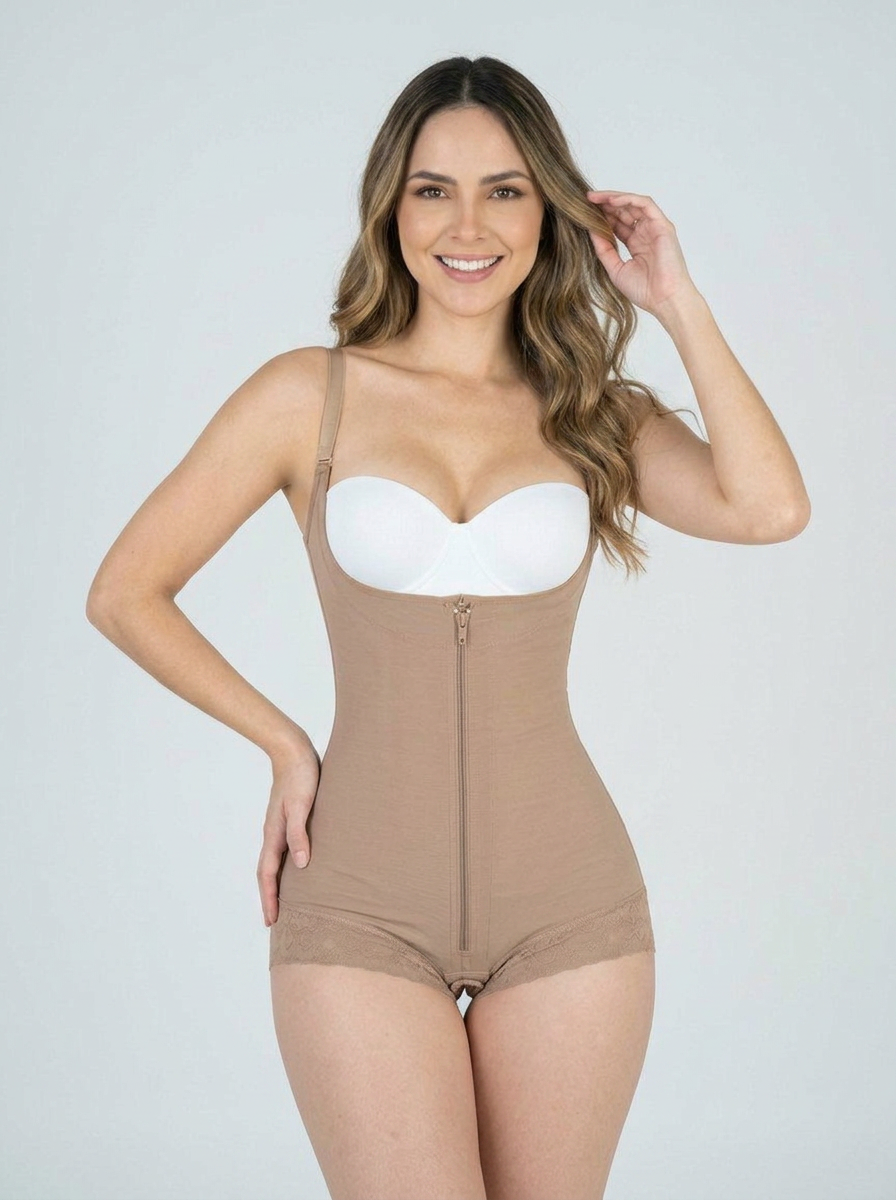
Our fabric is engineered to do the first job beautifully. Colombian Triconet and powernet knits give graded, elastic compression: they hold your abdominal wall in gentle approximation, reduce the pulling sensation across your midline, support a C-section incision while you move, help control post partum swelling, and give your spine something to stack against so you stop collapsing forward while you feed.
What they deliberately do not do is lock you into a rigid shell. The knit stretches as you inhale, so your diaphragm can still move and your deep core can still switch on. You can activate your transverse abdominis inside the garment. You can breathe into your ribs. You can walk, bend and lift the baby using your own muscles — with support layered around them, not instead of them.
That balance is the whole point. Compression so extreme that nothing can move is what leads to a weak, switched-off core, downward pressure on the pelvic floor and shallow breathing. Supportive compression with room to engage is what makes a faja the best help to recover post partum — and the best partner to your diastasis recti work.